
Value Allocation: Goodwill Isn't a Method — It's a Default
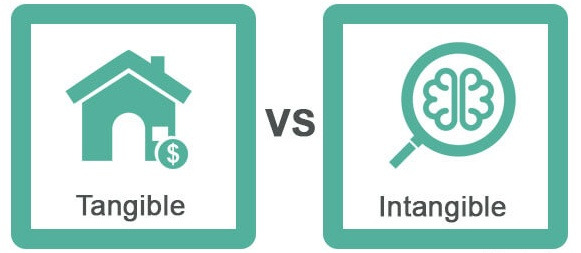
If you've worked through a going-concern property tax allocation lately, you know how it usually ends: tangible assets get appraised, working capital gets estimated, and whatever is left over gets labeled "goodwill." The residual becomes the intangible deduction — or the number a taxpayer fights over in appeals. Nobody loves this approach. But most practitioners use it anyway, because until now there hasn't been a credible alternative. That's the problem worth naming plainly: the goodwill plug isn't a methodology. It's what happens when a methodology is missing.
VALUE ALLOCATION
Scott Sampson
5/14/20261 min read
Why the Plug Creates Risk
The residual approach has a structural flaw that doesn't announce itself until you're in a hearing room.
When intangible value is defined as whatever the appraiser can't otherwise account for, it becomes impossible to defend independently. The number absorbs every modeling error upstream — an aggressive income approach, a stale cap rate, an understated tangible base. By the time you reach the intangible deduction, the residual is carrying the weight of every assumption that came before it.
Assessors know this. Taxpayer counsel knows this. And in jurisdictions where intangible exemptions are contested, the goodwill plug is often the first number attacked — precisely because it was never grounded in anything observable.
A Market-Grounded Alternative
The WARA-WACC Equivalence Method approaches the allocation problem from the opposite direction.
Rather than solving for intangibles as a residual, the method uses a binding identity — Weighted Average Return on Assets equals Weighted Average Cost of Capital — to solve simultaneously for tangible and intangible weights. The required returns on each asset class are estimated empirically from a cross-sectional regression of over 2,600 U.S. public companies, producing market-derived rates rather than appraiser assumptions.
The result is an allocation that can be replicated, stress-tested, and defended with reference to observable capital market data. The intangible weight is not "what's left." It's a specific, mathematically constrained solution grounded in how markets actually price asset-intensive versus intangible-intensive businesses.
What This Means in Practice
For assessors, the method provides a consistent, auditable framework that can be applied across industrial, hospitality, healthcare, and other going-concern property types — reducing the subjectivity that drives disputes.
For taxpayers and their advisors, it provides a defensible intangible deduction that doesn't collapse under cross-examination because it was never built on a plug to begin with.
Get the White Paper
If you're currently navigating a going-concern allocation — or anticipate one on appeal — I'd welcome the conversation.
Request the practitioner white paper or reach out directly to discuss whether the WARA-WACC Equivalence Method is appropriate for your situation.